How to Break Into GTM Engineering
By Drew Bredvick··4 min read
GTM Engineering barely exists as a title. LinkedIn doesn't have a category for it. Most companies don't have the role. The ones that do invented it in the last twelve months.
Here's my take:
GTM Engineering is pattern recognition turned into automation: find what works, then build agents that do it better every time.
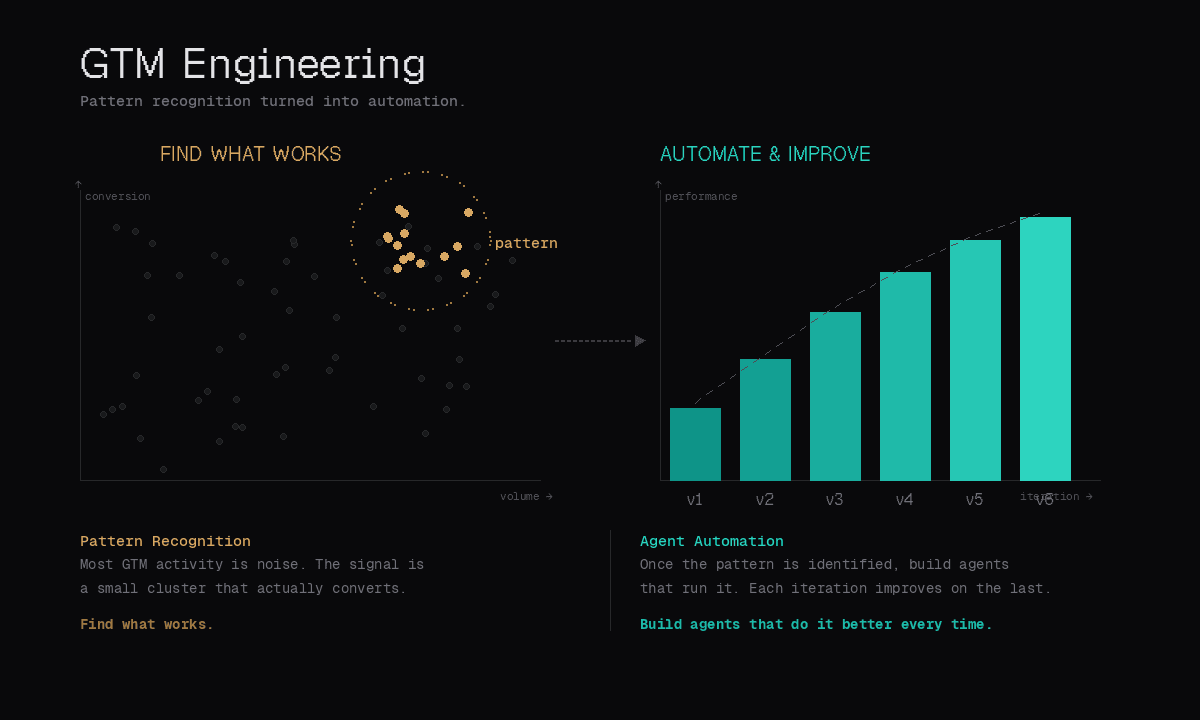
I run GTM Engineering at Vercel and we're hiring. Here are some of the common paths I've seen.
Four Paths In
I've seen people break into this role from four different backgrounds. Each brings something distinct.
Solutions Engineers. This is the path I took. You already understand the sales motion, you've been in customer conversations, and you've built technical demos. The gap to close is going from reactive (building what sales asks for) to proactive (building what the business needs before anyone asks).
Former Founders. Founders have product sense baked in from survival. You've dealt with ambiguity, you know how to filter signal from noise in customer feedback, and you're comfortable making decisions without perfect information. The gap to close is learning to operate within a larger org without losing that bias to action.
Product-Obsessed Engineers. Some engineers never really needed a PM. They have taste. They see a problem and know what to build. These folks sometimes debated becoming PMs but stayed technical because they like shipping. If that's you, GTM Engineering might be the perfect middle ground.
RevOps Folks Who Want to Build. This is the underserved path, and honestly one of the most promising. If you're in RevOps, you already have a map of the territory. You know where the operational fires are. You understand the systems. What you need is the ability to build, and that's never been easier to learn. Dive headfirst into learning how to code.
Your First Project
There are two types of agents worth building, and your first project should be one of them.
Excellence agents close the gap between your best performers and everyone else. Shadow your top rep. Figure out what they do differently. Build something that gives that same edge to the rest of the team. This is greenfield work with pure upside. Nobody's job is threatened because you're not replacing anyone. You're raising the floor.
Efficiency agents tackle operational fires. High volume, low cognitive complexity, someone already doing the task manually. Think lead routing, data enrichment, inbox triage. You know these exist because people complain loudly about them.
The bar for "proving you can do this" is straightforward: ship an AI automation that you wrote, deployed yourself, and that runs in production.
This sounds like a high bar, but if you clear it, you're in the top 1% of candidates. Most applicants talk about AI. Almost none have gotten their hands dirty and shipped something.
Good vs Great
Good GTM Engineers are technically capable. They can build the thing.
Great GTM Engineers show extreme accountability, filter useful signal from noisy feedback, and turn ambiguous problems into product vision. They don't wait for requirements. They go find the problem, validate it matters, and ship a solution.
The difference is agency. Good candidates build what you ask for. Great candidates come back with something better than you imagined because they dug deep to understand the problem.
Staying at the Frontier
This field changes literally every day. New models drop. New capabilities unlock. Abstractions that didn't exist last month become best practices.
If you're not obsessed with trying new things, this will be exhausting. If you are obsessed, you get paid to have the time of your life. You're building in an exciting frontier, working on tough problems, collaborating with smart people, and shipping things that actually matter to the business.
I stay current by trying everything. When a new lab releases something, I test it. New model? I run it against my existing workflows. New feature? I find an excuse to use it. It's genuinely fun if you're wired this way.
The Real Blocker
Fear.
The tools exist. Open source examples exist. Claude can help you write the code. It has genuinely never been easier to build.
But most people won't start. They'll read posts like this, nod along, and never ship anything. They'll tell themselves they need to learn more first, or the timing isn't right, or someone else will beat them to it.
Don't ask for permission. Don't wait until you feel ready. Pick a small project, something low stakes, and ship it this week.
The people who break into GTM Engineering don't know more than you. They're just the ones who decided to start.
If this sounds like you, I'm hiring.
Continue reading
A few useful places to go next.
- Learning sales as an engineerLearning sales is hard, but it's critical for your business to succeed.
- How I Learn from Top Performers Before Building AI AgentsShadowing reveals what actually matters. Stated preference gives you the dream. Revealed preference shows you what to ship.
- Building Vercel's First GTM AgentWe went from 10 inbound SDRs to 1 and saved $2M+. Here's the playbook.

The newsletter
Don’t miss the next one.
Field notes on GTM engineering and the craft of shipping software in the AI era — straight to your inbox.
No spam. Unsubscribe anytime.